Europe’s AI Factories brought together more than 250 participants for hands-on AI agent development
From July 20 to 22, 2026, the European Agentic AI Bootcamp brought together participants from across Europe for an online training. The English-language intermediate-level training was designed for developers, researchers, businesses, public sector organisations, start-ups and SMEs who wanted not only to understand AI agents, but also to build, evaluate and integrate them into real-world workflows.
The bootcamp was jointly organized by several European organizations—AI Factory Austria, HammerHAI, Gaia AI Factory, and PHAROS-CY—as well as leading partners from the high-performance computing and AI ecosystem: Austrian Scientific Computing (ASC), the High-Performance Computing Center Stuttgart (HLRS), the Leibniz Supercomputing Centre (LRZ), the Academic Computer Centre Cyfronet AGH, OpenACC, and NVIDIA. As such, it exemplified the European vision behind the AI Factories: connecting national strengths, sharing expertise, and providing businesses, researchers and public sector organisations with accessible pathways to advanced AI capabilities.
Agentic AI refers to AI systems capable of planning and carrying out complex tasks more autonomously by combining multiple data sources, tools, and intermediate steps. For organizations, this opens up new opportunities ranging from intelligent assistants and automated analysis workflows to sophisticated applications in research, industry, and public administration. At the same time, it raises new challenges in system architecture, quality assurance, latency, performance, security, and responsible deployment.
Practical tools for modern AI agents
The bootcamp focused on practical building blocks for modern AI agents, including Agent Skills, the Model Context Protocol (MCP), NVIDIA® NIM™, LangGraph, and the NVIDIA NeMo™ Agent Toolkit. Participants learned how to develop Agent Skills, build HTTP-based MCP clients and servers, and integrate these technologies into LLM workflows orchestrated with LangGraph and the NVIDIA NeMo Agent Toolkit.
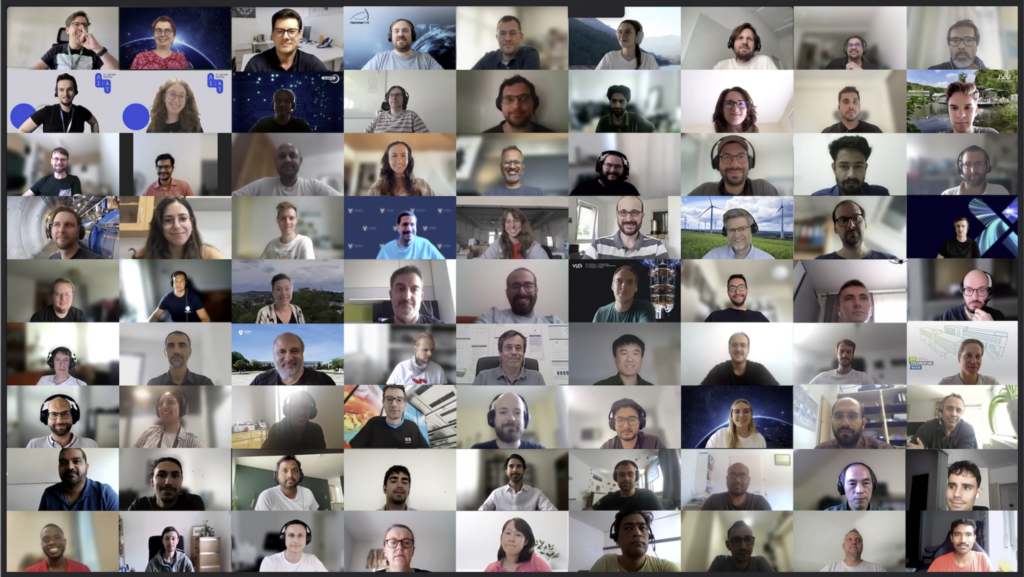
Around 250 participants from across Europe worked alongside 30 trainers, tutors, and technical assistants, demonstrating the international collaboration that characterises the European AI Factory network. The practical exercises were supported by Athena, Cyfronet’s supercomputer in Poland.
Near the end of the program, participants applied what they had learned in a hands-on challenge using an existing LLM workflow. The goal was to provide reusable patterns that teams could adapt for their own applications, as well as early evaluation of quality, latency, and performance.
European collaboration as a competitive advantage
A key focus of the bootcamp was collaboration across multiple AI Factories. By jointly delivering the program, the partners not only pooled technical expertise but also created a shared European environment for learning and practical collaboration. Participants gained access to knowledge from different national AI ecosystems and prepared for applications that can be further developed through future European hackathons and AI projects.
This article was originally published by AI Factory Austria and is republished here with permission.