
Hardware
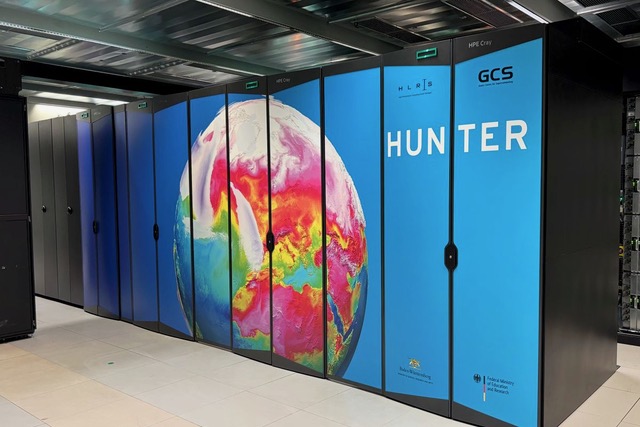
HammerHAI will host a new AI-optimized, EuroHPC Joint Undertaking supercomputer at the High-Performance Computing Center Stuttgart. This powerful system will be designed to support medium- to large-scale AI workloads. It will combine high computational efficiency with cloud-like usability, allowing users to seamlessly integrate existing solutions with the HammerHAI system and access high-performance AI resources on demand. Delivery of the system is scheduled for the second quarter of 2026 and it is expected to go into operation in the second half of 2026.


Test now and grow
The HammerHAI consortium currently operates a variety of computing systems based on NVIDIA, AMD, or Intel processors. These existing systems can already run many commonly used artificial intelligence applications and workflows, putting AI capabilities at your fingertips. By beginning now, you can also prepare to use the new HammerHAI supercomputer as soon as it becomes available.
During a one-on-one meeting with a representative of the HammerHAI concierge service, we can provide detailed specifications concerning the computing systems best suited for your application.
Explore services
-

-

HammerHAI Training Platform
The HammerHAI Training Platform provides HammerHAI users GPU-based high-performance computing resources for AI training tasks in research, development and technology.
-
Secure EU AI Platform
The Secure EU AI Platform enables batch processing of sensitive and personal data on isolated, exclusive HPC nodes through end-to-end encryption and other security measures. It enables the processing of critical data in accordance with GDPR Art. 9.
-
Test Access to GPU Systems
HammerHAI can provide you with a test account for a pilot study, making it possible to begin developing or optimizing your deep learning and AI applications.
Stay informed
HammerHAI is growing! Subscribe to our newsletter for periodic updates and be among the first to learn about our newest services, resources, and activities:
You can also follow HammerHAI on LinkedIn, BlueSky and YouTube.